In the previous part, we learned about the preliminary beer brewing processes such as raw material handling, mashing, lautering, and boiling, and the wort is now ready. Next, the wort will enter the fermentation tank to start the key transformation from wort to beer. This article will introduce you to the core design, operating process of the fermentation tank, as well as the control system and cleaning system that ensure the stability of the brewing process.
Part 1: Fermentation Stage: Fermentation Tank Core System
1.1 Yeast Addition and Cooling Method
Yeast Feeder: After cooling, the wort is oxygenated and passed through the yeast addition tank for yeast inoculation, providing the “power” to start the fermentation process and ensuring that the yeast can multiply smoothly in the wort and start the fermentation reaction.
Cooling Method: The tank is equipped with a dimple cooling jacket and cooled via a circulating glycol-water system, which can precisely control the fermentation temperature to meet the fermentation temperature requirements of different beer varieties.
1.2 Fermentation Operating Procedure
The wort enters the fermentation tank through the yeast addition tank, and the tank is sealed for fermentation after being filled, ensuring that the fermentation process is carried out in a closed and sterile environment.
After fermentation is completed, gradually lower the temperature to allow the yeast to settle, facilitating subsequent beer separation and clarification.
After sedimentation is completed, the beer can be filled and enter the subsequent packaging stage.
1.3 Core Components and Functions of Fermentation Tank
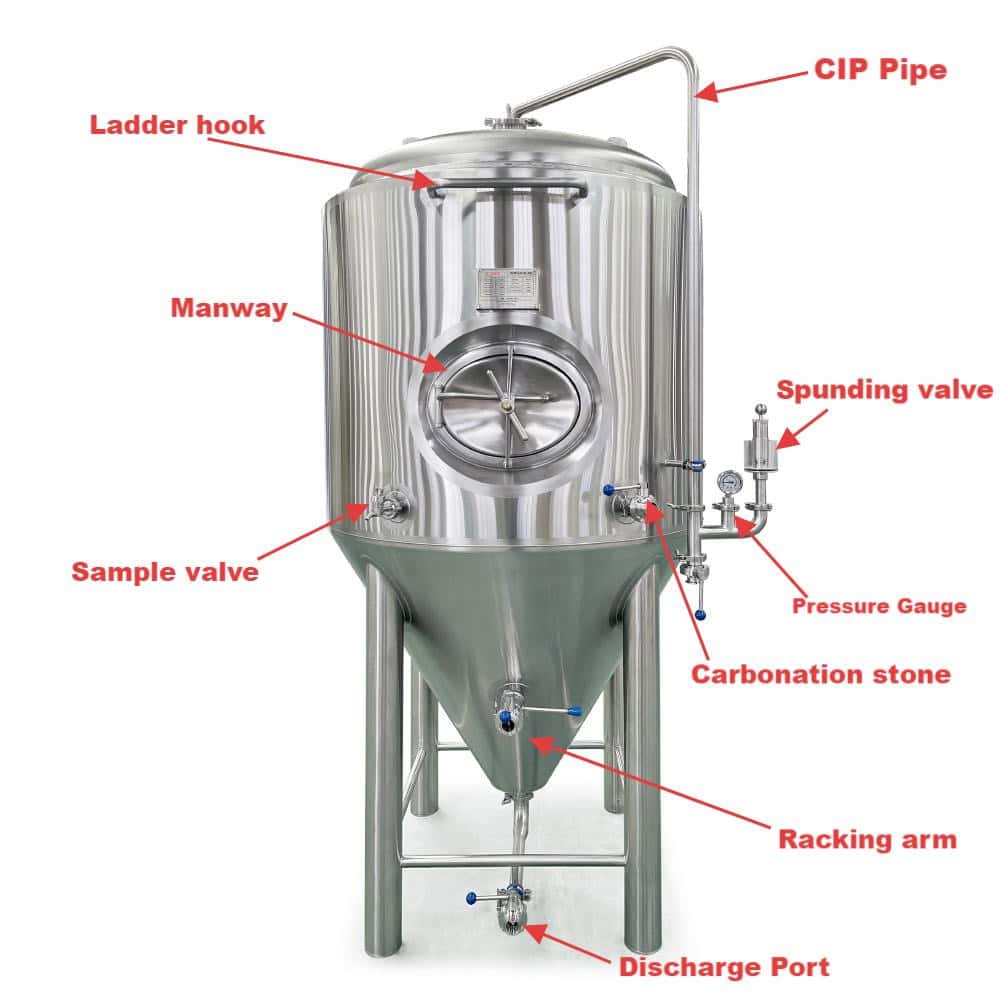
Racking Arm: After fermentation is completed, the outlet position can be adjusted to maximize beer yield, reduce residues in the tank, and improve raw material utilization.
Solenoid Valve: Cooperates with the PT100 temperature probe to automatically start and stop the glycol pump and refrigeration unit according to the temperature set in the control cabinet, ensuring precise cooling control and maintaining the stability of the fermentation temperature.
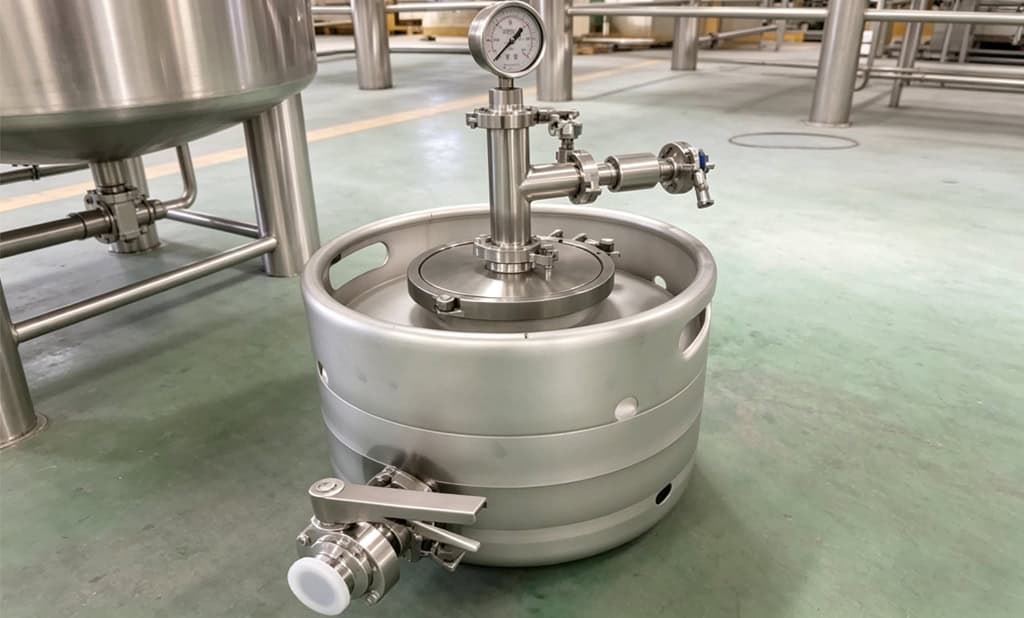
Pressure Gauge: Monitors and displays the tank pressure in real time, ensuring that the fermentation process is carried out in a safe and stable pressure environment, avoiding the impact of abnormal pressure on beer taste and equipment safety.
Sampling Valve: Allows sampling during fermentation to monitor fermentation progress and beer quality, helping operators control fermentation timing and process parameters, and adjust fermentation conditions in a timely manner.
Cleaning Ball: Provides full internal cleaning of the tank, ensuring no sanitary dead corners inside the tank, guaranteeing the hygiene and safety of each batch of brewing, and avoiding cross-contamination between batches.
Spunding Valve: Regulates the tank pressure during fermentation, and the fermentation status can also be judged by observing the bubbles in the water seal, allowing operators to intuitively grasp the fermentation status.
Safety Valve: Automatically releases pressure in case of abnormalities to prevent overpressure, ensuring the safety of equipment and operators and avoiding safety accidents.
Temperature Probe: Monitors the fermentation tank temperature in real time and sends signals to the control cabinet to achieve precise temperature control, ensuring that the fermentation process is carried out at an appropriate temperature.
Carbonation Stone: Adds CO₂ during fermentation or maturation to achieve the desired carbonation level in the beer, giving the beer a refreshing taste and improving the drinking experience.
Part 2: Control System: The “Brain” of the Brewing Process
The control cabinet is customized according to specific requirements and configurations, and is the control core of the entire brewing equipment, ensuring the stability and precision of the brewing process.
2.1 Core Control Functions
The system can control the operation of equipment such as rakes, agitators, and pumps, and monitor and adjust the tank temperature in real time, including the temperature of hot water tanks, mashing systems, and fermentation tanks, ensuring that the parameters of each brewing link meet the process requirements.
2.2 Control System Configuration
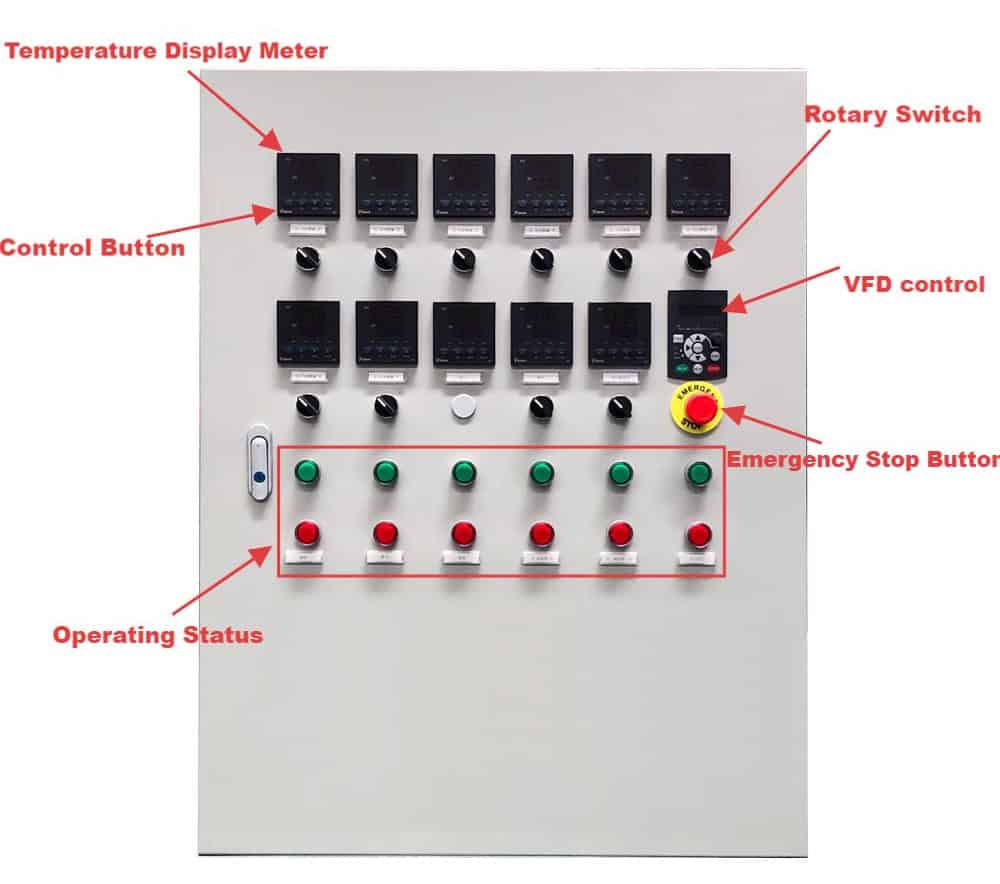
Temperature Controller / Temperature Display Meter:
Receives signals from temperature probes (such as PT100) and displays the real-time temperature of the tank or pipeline on the control cabinet, allowing operators to keep abreast of the temperature status at any time.
Automatically controls the heating or cooling system according to the set value to ensure that the process temperature meets the requirements and maintains the temperature stability of the brewing process.
Setting Buttons / Control Buttons: Operators can set equipment parameters such as temperature on the control cabinet or operation panel to achieve flexible adjustment of process parameters.
Variable Frequency Drive (VFD):
Adjusts the motor input frequency to control the speed of pumps, agitators and other motors, precisely controlling the flow rate and agitation speed, and improving process flexibility.
Saves energy, reduces mechanical impact and wear, and extends the service life of equipment.
Enables smooth start / stop, ensuring the stability of fermentation or mashing processes and avoiding the impact of equipment start/stop on the process.
Emergency Stop Button (E-Stop): In case of abnormal or emergency situations, immediately cut off the power supply of all equipment, stop all running machinery and pumps, and ensure the safety of equipment and operators.
Rotary Switch: Switches between different operation modes or control circuits, such as starting/stopping equipment, selecting operation modes, or controlling different functional units, to meet different operation needs.
Operating Status / System Status: Displays the real-time operating status of the equipment or system, including running or stopped status, allowing operators to intuitively grasp the operating status of the equipment.
2.3 Fermentation and Maturation Temperature Control
The fermentation tank temperature can be set through the adjustment buttons below the temperature controller to meet the fermentation temperature requirements of different beer varieties.
The control cabinet receives signals from the PT100 probe and automatically operates the solenoid valve to start or stop the glycol pump, adjusting the tank cooling to achieve automatic temperature control.
When the tank temperature reaches the set value, the cooling stops automatically; if the temperature exceeds the set value, the system restarts cooling to maintain temperature stability.
The rotary switch below the temperature controller can select manual and automatic control modes to achieve flexible operation, and can switch to manual mode for operation when the automatic mode is abnormal.
During yeast sedimentation, the temperature can be reset to adjust the process conditions, ensuring that the yeast can settle smoothly and improving the clarity of the beer.
Each fermentation tank is equipped with an independent temperature controller, which can set different temperatures for different types of beer, realizing multi-variety brewing and improving the applicability of the equipment.
Part 3: CIP System: Guarantee for Equipment Cleaning
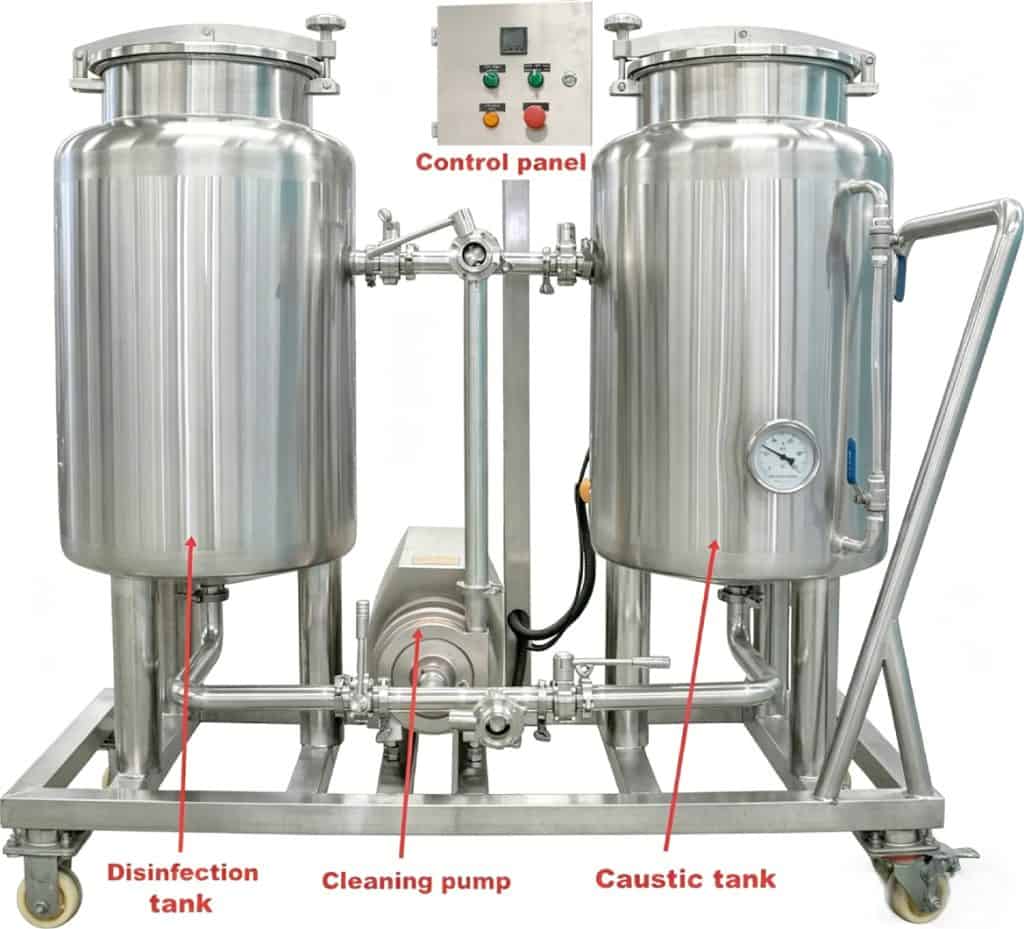
The CIP (Clean-In-Place) system is a key system to ensure equipment hygiene and safety, which can achieve efficient cleaning of equipment, avoid cross-contamination, and ensure the quality and safety of beer.
3.1 Caustic Tank Configuration
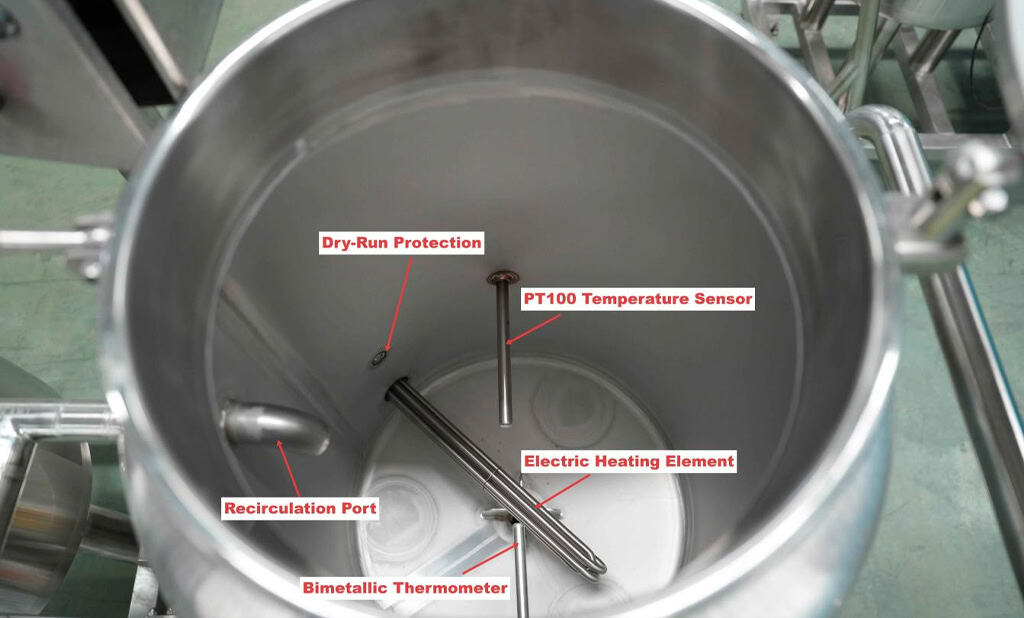
IFM LMC100 Dry-Run Protection: When the heating or pump system detects low liquid level or dry-run risk, automatically cut off the power supply or stop operation to prevent equipment damage or safety hazards.
Recirculation Port / Wort Return Port: Recovers the caustic solution for liquid circulation and reuse, reducing usage costs and resource waste.
Electric Heating Element / Immersion Heater: Uses electric energy to heat the liquid in the tank, providing caustic solution at a suitable temperature for cleaning and improving cleaning effect.
PT100 Temperature Sensor: Monitors the liquid or tank temperature in real time to ensure that the cleaning temperature meets the requirements and guarantees the cleaning effect.
Bimetallic Thermometer: Uses the thermal expansion of bimetallic strips to directly display the temperature inside the tank or pipeline, facilitating operators to view intuitively.
Cross Baffle: Installed inside the tank to prevent vortex formation of the liquid, ensuring the stability of liquid circulation and improving cleaning uniformity.
3.2 Sanitizing Tank Configuration
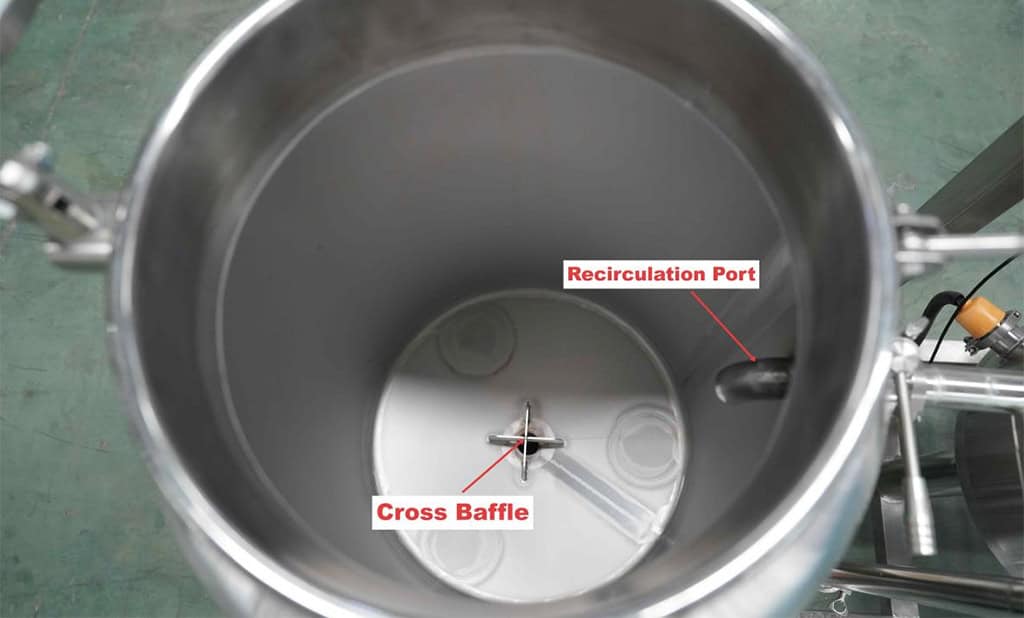
Recirculation Port / Wort Return Port: Used to recover acid or sanitizing solution for liquid circulation, improving the utilization rate of sanitizing solution and reducing usage costs.
Cross Baffle: Installed inside the tank to prevent vortex formation during circulation, ensuring the effect of circulating cleaning and ensuring that every part of the equipment can be cleaned.
3.3 Independent Control System
Equipped with IFM LMC100 level switch to monitor the tank liquid level, ensuring safe operation and avoiding equipment damage due to abnormal liquid level.
Automation functions include automatic start / stop control of pumps, and temperature-controlled automatic cleaning processes, maintaining process temperature during hot water cleaning and improving cleaning effect.
3.4 Automated Temperature-Controlled Cleaning Process
Cleaning sequence: Clean water / hot water → hot caustic solution → hot water → acid / sanitizing solution → sterile brewing water or hot water. The multi-step cleaning ensures the hygiene and safety of the equipment.
3.5 Cleaning Method
Connection: Connect the cleaning liquid to the tank’s CIP line through a hose to form a circulation loop, realizing in-place cleaning of the equipment.
Pre-Rinse: Initially rinse with clean water or hot water, open the discharge port for pre-rinse, and close the relevant valves after completion to remove residual materials on the equipment surface.
Circulation Cleaning: When using caustic or acid solutions, close the discharge port, open the corresponding valves, and start the pump for circulating cleaning to ensure that every part of the equipment can be covered by the cleaning liquid.
Collection: After cleaning, pump the cleaning liquid into the CIP cart for collection to improve the reuse rate of the solution and reduce usage costs.
Note: The fermentation tank is a closed vessel. During cleaning, it is recommended to use clean water or sterile water instead of hot water to avoid negative pressure inside the tank, which may affect the cleaning effect or cause safety hazards.
Part 4: Conclusion
From raw material handling to fermentation and filling, beer brewing is an interlinked process, and every piece of equipment and process contributes to the final beer quality. By understanding the functions and operating processes of these core equipment, you can better control every link of beer brewing and brew high-quality beer. Whether it is a small craft brewery or a medium-sized brewery, this equipment system can provide stable support for your brewing business.
If you are interested in our beer brewing equipment, welcome to visit our official website for more product details, or contact our professional technical team to get exclusive customized brewing solutions, helping you start a high-quality craft beer brewing journey.