Question 1: Are the welds sanitary and made with TIG welding and polishing?
All tanks and piping are manufactured using TIG welding. We have more than 30 certified welders, capable of handling stainless steel thicknesses from 2mm to 15mm. All welds are fully penetrated, with no porosity or slag inclusion.
For piping in particular, we use a mature single-sided welding with double-sided forming process, combined with endoscopic inspection to ensure there are no sanitary dead zones inside the welds. This guarantees compliance with food-grade hygiene standards and ensures long-term stable operation.
Question 2: Is it recommended to include a malt mill for this 120L system?
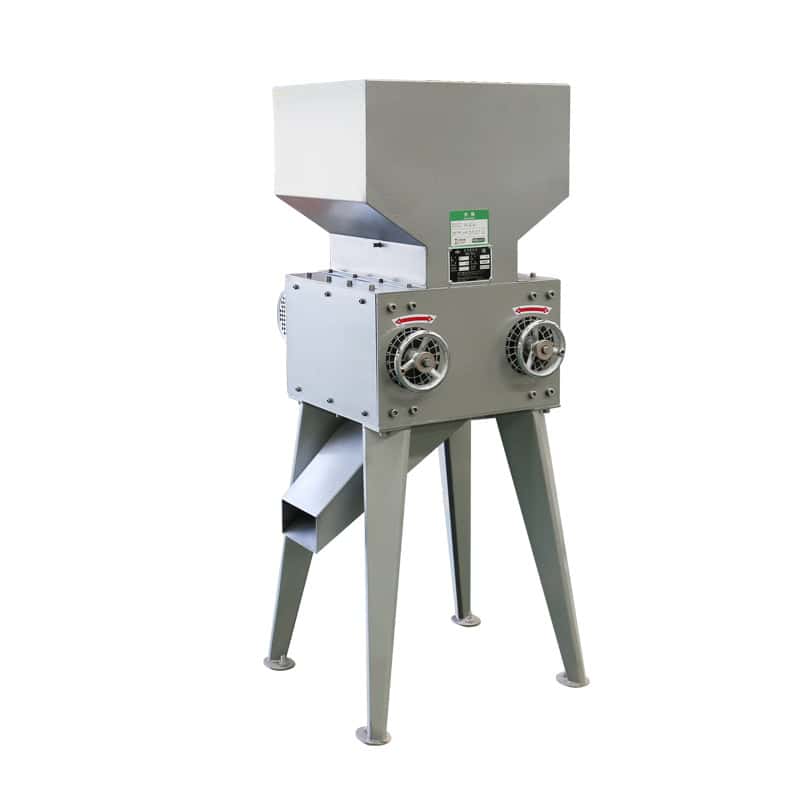
Considering the relatively small capacity of the 120L system and the limited malt usage per batch, many customers choose to purchase pre-milled malt locally for convenience.
However, if required, we can also supply a two-roller malt mill. The crushing degree can be adjusted by controlling the gap between the rollers, while maintaining the integrity of the husk, which is beneficial for the subsequent lautering process.

Question 3: Does the system only support single infusion mashing, or can it also perform step mashing?
For this small-scale system, we generally recommend Single Infusion Mash, as it is simpler and more efficient to operate.
If step mashing is required, there are two possible solutions:
1). Without a hot water tank: Temperature steps can be achieved by adding hot water, but accurate calculation of water ratios is required;
2). With a hot water tank: A coil can be installed inside the hot water tank, and wort can be circulated through the coil via a pump for heating, then returned to the mash tun to achieve step temperature control.
Question 4: Is wort recirculation (Vorlauf) possible during the mash/lauter stage?
Yes, it is possible.
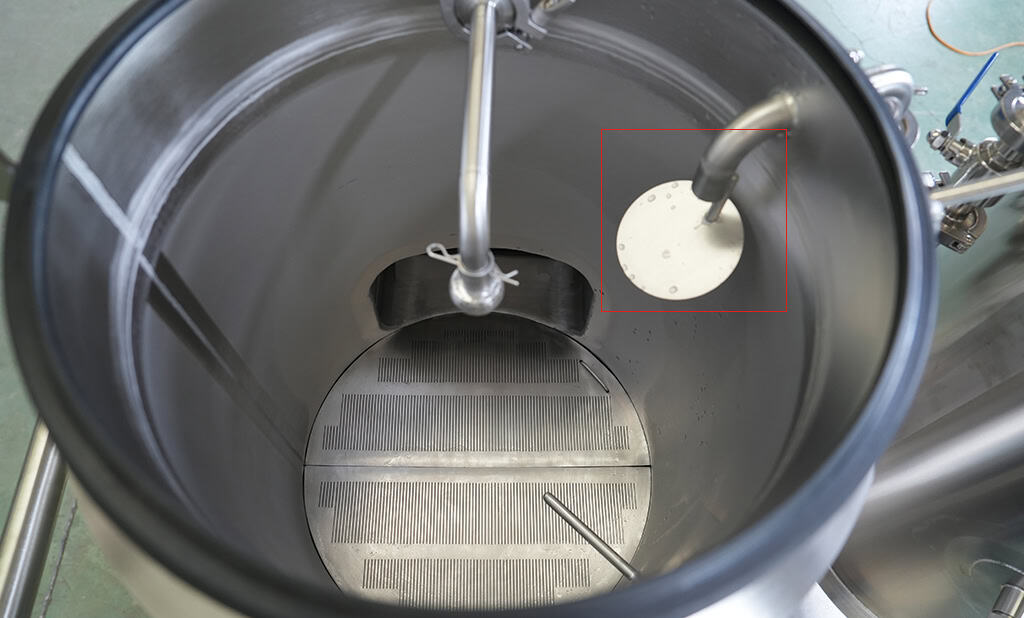
Although this is a small system, its design principles are the same as those of standard craft brewing systems. A wort recirculation port is installed in the mash/lauter tun, allowing wort to be recirculated through a pump during lautering (Vorlauf), which helps improve wort clarity.
Additionally, a baffle plate is installed at the recirculation inlet to reduce the impact on the grain bed and prevent it from being disturbed, thus improving filtration efficiency.
Question 5: What is the minimum workable batch size for this system?
The system is designed for a maximum batch size of approximately 120L of wort.
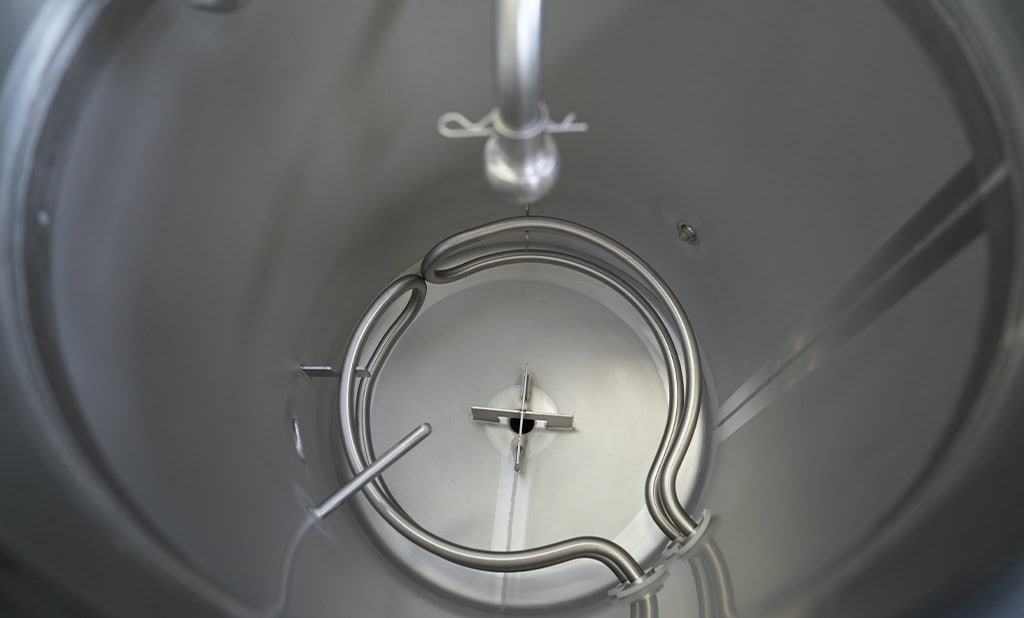
If you prefer to brew smaller batches, the recommended minimum working volume is around 80L. This is because the kettle/whirlpool is electrically heated, and the liquid level must remain above the heating elements to avoid dry heating and ensure safe operation.
Question 6: How is the whirlpool formed in the kettle/whirlpool, and where does the wort exit after the whirlpool?
During the kettle/whirlpool stage, wort enters the tank through a tangential inlet on the side, creating a rotational flow along the inner wall of the vessel.
After the whirlpool process is completed, the wort is discharged through the outlet at the lower side of the tank and then transferred to the plate heat exchanger for cooling.
Question 7: How are the pump, plate heat exchanger, and pipelines cleaned and sanitized before wort transfer to the fermenters?
Hot water can be circulated through the pump, plate heat exchanger, and pipelines using the pump. This process is repeated several times to ensure effective cleaning and sanitization.
This method is simple and efficient, and suitable for small-scale brewing systems.
Question 8: Do you provide remote technical support for maintenance and troubleshooting?
Yes.
If the equipment requires maintenance or technical support during operation, our technicians can provide assistance through remote guidance (such as video calls).
In addition, for this 120L system, we will complete pre-installation and commissioning in the factory, ensuring that once the equipment arrives on-site, it can be put into operation quickly with only power connection and basic setup.
Question 9: Do after-sales spare parts need to be purchased from SDET, or can they be sourced locally?
For standard components such as seals and pipes, we use unified specifications, and these parts can generally be purchased locally.
For certain specific components, they may need to be sourced from China, but it is not necessary to purchase them directly from us. These components are typically supplied by well-known manufacturers and are widely available in the market.
Summary
Based on the above features and design, this 120L small-scale craft brewing system is designed to combine:
~ Food-grade hygiene standards
~ Easy and user-friendly operation
~ Complete brewing functionality
~ Reliable after-sales support
It is an ideal solution for:
~ Brewpubs and small bars
~ Beginners entering the craft brewing industry
~ Recipe development and pilot brewing
It provides a practical and cost-effective way to start or expand your brewing journey.